
Quick Facts
– Verse: Psalm 95:8 (KJV) — “Harden not your heart, as in the provocation, and as in the day of temptation in the wilderness:” – Theme: A soft, listening heart before God – Context: A psalm of worship (Psalm 95:1-7) that turns into a warning (Psalm 95:8-11) – Quoted again in: Hebrews 3:7-8, Hebrews 3:15, Hebrews 4:7 — “To day if ye will hear his voice, harden not your hearts.” – Story behind it: Meribah and Massah, Exodus 17:7 — Israel tested God in the wilderness – What this article gives you: The meaning of psalms 95 8 in plain words, the story behind it, and 40 original blessings and prayers for a soft heart
Introduction: Today, If You Will Hear His Voice
What if today is the day God is speaking, and the only thing standing between you and His rest is a hard heart? That is the question at the centre of psalms 95 8, one of the shortest warnings in the Bible — and one of the most urgent. It does not shout. It does not threaten. It simply says, in the King James Version, “Harden not your heart, as in the provocation, and as in the day of temptation in the wilderness.”
The verse sits in the middle of a psalm that begins with singing. Psalms 95 8 sits in the middle of a song of worship — and that placement is the point. “O come, let us sing unto the LORD: let us make a joyful noise to the rock of our salvation” (Psalm 95:1, KJV).
The people are called to worship, to bow down, to kneel before the LORD their maker. Then, without warning, the song stops and the warning begins: “To day if ye will hear his voice, harden not your heart.” The same God who is worthy of worship is speaking right now, and the psalm asks only one thing — do not shut Him out.
This article explains psalms 95 8 in plain, honest words. You will find what the verse means, the true story behind it — the rebellion at Meribah in the wilderness — why the New Testament quotes it three times in Hebrews, and what a soft heart looks like in daily life. You will also find 40 original blessings and prayers, written from this verse, to help you keep your heart open to God in the morning, in hard times, with your family, and at night. They are original words, not Scripture, and they are written to be prayed slowly, one at a time.
Psalms 95 8 Explained: Harden Not Your Heart
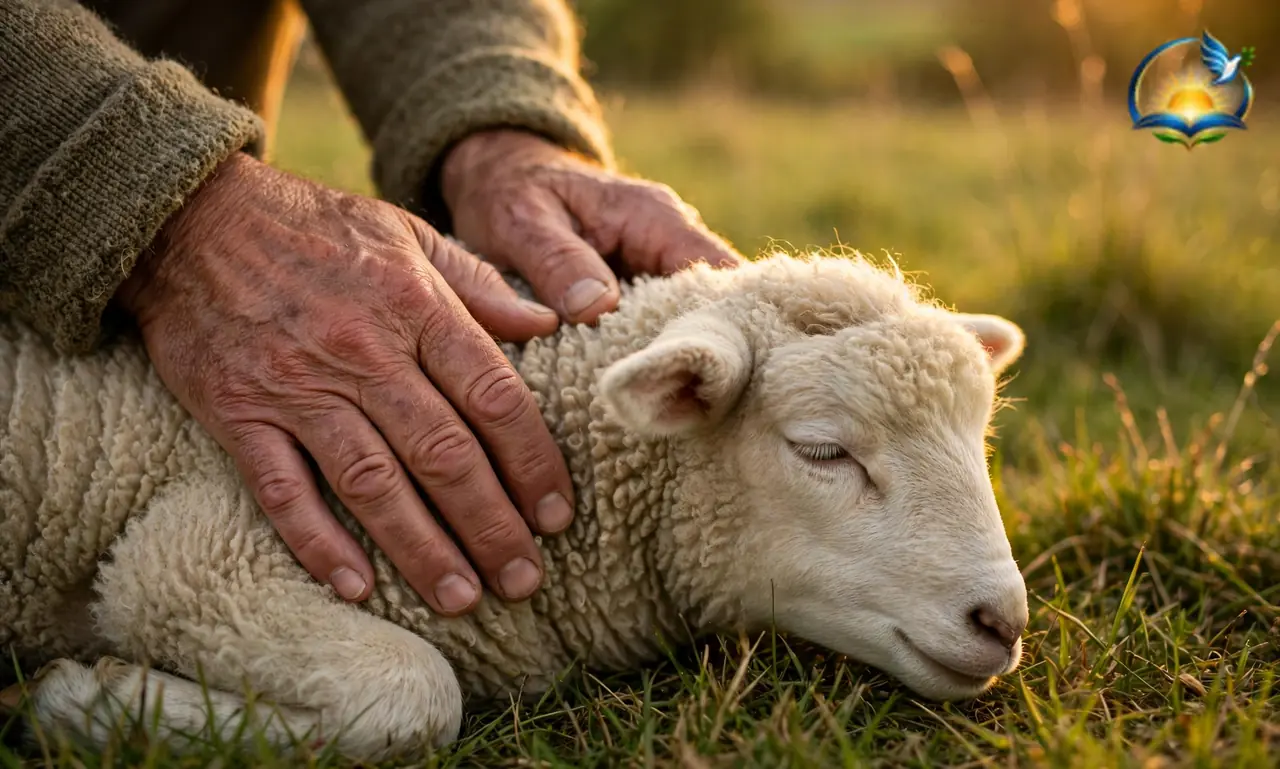
Psalms 95 8 is a warning against a hard heart, given in the middle of worship. To understand it, read the two verses that come just before it. “O come, let us worship and bow down: let us kneel before the LORD our maker. For he is our God; and we are the people of his pasture, and the sheep of his hand. To day if ye will hear his voice, harden not your heart” (Psalm 95:6-8, KJV). The warning only makes sense inside the worship. The people are God’s sheep, held in His hand — and the Shepherd is speaking today.
The words “harden not your heart” describe a heart that has slowly closed. A hard heart is not made in a single day. It is made by small refusals: a prayer put off, a warning ignored, a blessing received without thanks, a sin excused one more time. Each refusal adds a thin layer, until the heart that once heard God clearly can barely hear Him at all. The psalm does not say God hardens the heart against a person’s will. It says the opposite — it pleads with the person not to harden their own heart. The choice is ours, and the warning is loving: do not let your heart become stone while God is still speaking.
The verse then gives two pictures of what a hard heart looks like, both from Israel’s journey in the wilderness. “As in the provocation, and as in the day of temptation in the wilderness.” The provocation was the rebellion at Meribah, where the people quarrelled with Moses and tested God. The day of temptation was Massah, where they demanded proof and asked, “Is the LORD among us, or not?” (Exodus 17:7, KJV).
In both places the people had already seen God’s power — the sea parted, the manna fell, the water came from the rock — and still they doubted. That is the heart of the warning: a hard heart is not a heart that has never seen God’s work. It is a heart that has seen it and still refuses to trust.
There is a difference between a hard heart and a hurting heart, and the psalm honours it. A hurting heart is honest about its pain. It cries, it questions, it brings its wounds to God — and God meets it there. A hard heart stops bringing anything to God at all. It stops listening, stops asking, stops kneeling. The verse does not condemn the person who is struggling to believe. It warns the person who has stopped listening altogether. If you are reading this article because your heart feels heavy, tired, or far from God, that very hunger is a sign your heart is still soft. A truly hard heart does not search for God.
The word “today” is the most hopeful word in the verse. “To day if ye will hear his voice.” Not yesterday, when you failed. Not tomorrow, when you hope to be better. Today. The warning is urgent, but the door is open right now. A heart that has been hardening for years can soften in a single honest prayer. That is why the New Testament returns to psalms 95 8 again and again: the warning is repeated because the invitation is repeated. Every day God speaks is another day to answer with a soft heart.
For readers walking through a season of restoration, these god is restoring you blessings speak to the same hope — that God rebuilds what is broken, including a heart that has grown hard.
The Story Behind Psalms 95 8
Psalms 95 8 points back to a story every reader of the Old Testament knows — the rebellion at Meribah and Massah, told in Exodus 17:1-7. The children of Israel had come out of Egypt. They had walked through the Red Sea on dry ground. They had eaten manna from heaven. And then they came to Rephidim, and there was no water to drink.
The people did what thirsty, frightened people do: they quarrelled with Moses. “Give us water that we may drink,” they said. Moses answered, “Why chide ye with me? wherefore do ye tempt the LORD?” But the people pressed him, and they said the words that gave the place its name: “Is the LORD among us, or not?” (Exodus 17:7, KJV). Moses cried out to God, God told him to strike the rock at Horeb, water came out, and the people drank. “And he called the name of the place Massah, and Meribah, because of the chiding of the children of Israel, and because they tempted the LORD, saying, Is the LORD among us, or not?” (Exodus 17:7, KJV).
That question — “Is the LORD among us, or not?” — is the question of a hard heart. It is not asked once, in ignorance. It is asked after the sea, after the manna, after the daily bread from heaven. The people had proof, and they still demanded more proof. They had a Shepherd, and they still asked whether He was there. The psalm remembers this moment hundreds of years later and holds it up as a mirror: do not be like them. Do not stand in the wilderness, holding yesterday’s miracles in your hands, and ask whether God is with you.
The warning of psalms 95 8 did not end with that generation. Forty years later, the psalm says, “Forty years long was I grieved with this generation, and said, It is a people that do err in their heart, and they have not known my ways: unto whom I sware in my wrath that they should not enter into my rest” (Psalm 95:10-11, KJV). The generation that hardened its heart did not enter God’s rest — not because God refused to give it, but because a hard heart cannot receive rest. Rest requires trust, and trust requires a soft heart. That is the cost the psalm lays bare, so that we will choose differently.
Centuries later, the writer of Hebrews heard the same warning and knew it was still speaking. He quotes Psalm 95:8 three times — in Hebrews 3:7-8, Hebrews 3:15, and Hebrews 4:7 — and each time he adds the same word: “To day.” “Wherefore (as the Holy Ghost saith, To day if ye will hear his voice, harden not your hearts, as in the provocation, in the day of temptation in the wilderness” (Hebrews 3:7-8, KJV). The warning was not history to him. It was a living voice, speaking to his readers in their own day. It is still speaking now.
Faith that trusts God in the wilderness is the opposite of a hard heart. These matthew 17 20 21 blessings on faith like a mustard seed show what that trust looks like — small, honest, and enough to move mountains.
40 Blessings and Prayers for a Soft Heart
The 40 blessings below are original words written from psalms 95 8 — not Scripture, and not claiming to be. They are simple prayers for a heart that wants to stay soft before God: in the morning, in surrender, with family, in hard times, and at night. Use them slowly, one at a time, and pray them in your own words when you can.
Morning Blessings for a Listening Heart
- Good morning. May your heart be soft today, your ears open, and your spirit ready to hear God’s voice.
- Lord, before the day begins, soften my heart. Let me hear You in the quiet, not only in the noise.
- Father, this morning I open my hands and my heart. Speak, Lord — I am listening.
- May God bless your morning with a tender heart, a clear mind, and the courage to obey what you hear.
- Lord, keep me from the hardness of yesterday. Make this day a new beginning, with a heart made new.
- Heavenly Father, let my first thought today be of You, and my first answer be yes.
- May your heart not rush past God today. May you pause, listen, and find Him near.
- God, give me a heart like soft ground — ready for Your word to take root and grow.
Short Prayers of Surrender
- Lord, my heart is Yours. Soften what is hard, and heal what is hurt.
- God, I will not harden my heart today. I choose to listen, even when listening is hard.
- Father, take the stone from my heart and give me a heart that feels, trusts, and obeys.
- Jesus, Shepherd of my soul, lead me. I will follow where Your voice calls.
- Lord, I surrender my doubts to You. I do not need all the answers to trust You today.
- Heavenly Father, break my pride gently, and make room for Your grace in me.
- God, when I am tempted to demand proof, remind me of all You have already done.
- Lord, let my heart be open to correction, open to comfort, and open to You.

Blessings for Family and Loved Ones
- May God bless your family with soft hearts toward one another, quick to forgive and slow to judge.
- Lord, protect my children. Keep their hearts tender, their faith simple, and their trust in You strong.
- God, place Your hand over this house, and let every heart in it stay open to Your voice.
- Father, bless my parents with peace, my spouse with patience, and my children with hope.
- May the Lord keep your family from bitterness, and may His love soften every hard word.
- Lord, let our family be known for listening — to You, and to each other — so our home is a place of rest.
- God, heal the hard places between us. Give us hearts that turn toward each other, not away.
- May your loved ones hear God’s voice today, and may you be the gentle voice that points them to Him.
Prayers for Hard Times and Heavy Hearts
- Lord, my heart is heavy today, but it is not closed. Hold it gently, and keep it soft.
- God, in this hard season, do not let my pain turn to bitterness. Turn it to trust instead.
- Father, I have seen Your help before, and I will not forget it now. Remind me, and keep me steady.
- Jesus, when I am tempted to ask, “Are You even here?” — answer me with Your peace.
- Lord, I bring You my hardest question, and I will wait for Your answer with an open heart.
- Heavenly Father, the wilderness is long, but You are with me in it. Keep my heart from wandering.
- God, give me strength to obey today, even when I cannot see tomorrow.
- May your heavy heart find rest tonight, knowing the Shepherd has not left His sheep.
Evening Blessings of Peace and Rest
- Good night. May God soften your heart as you sleep, and wake you with His peace.
- Lord, I lay down today’s worries at Your feet. Guard my heart through the night.
- Father, thank You for speaking today. Help me to remember what I heard, and to obey it tomorrow.
- May your evening be quiet, your heart be light, and your rest be deep in God’s care.
- God, forgive the hardness of today, and give me a fresh heart for the morning.
- Lord, as the day ends, I kneel in my heart before You, my Maker. You are my God, and I am Yours.
- Heavenly Father, let my last thought tonight be gratitude, and my first thought tomorrow be trust.
- May God bless your night with rest, and may you wake with a heart ready to hear His voice again.
Meaning and Significance of Psalms 95 8
The meaning of psalms 95 8 reaches beyond a single verse. It is a call to stay tender before God for a whole lifetime. The psalm begins with joy — singing, thanksgiving, worship — and it ends with rest. Between the joy and the rest stands this one warning. The order matters. Worship softens the heart, a soft heart hears God’s voice, and hearing leads to rest. A hard heart breaks the chain at the first link: it stops worshipping, stops hearing, and never enters rest.
The significance for today is simple and practical. Every age has its own wilderness. Ours is full of noise, hurry, disappointment, and doubt — and each of these can harden a heart a little at a time. A person does not wake up one morning with a heart of stone. It happens slowly: a prayer unanswered, a promise that seems delayed, a wound that never quite heals, a blessing received without thanks. Psalms 95 8 names that slow drift before it becomes a settled state, and it offers the remedy in the same breath — hear His voice today. The remedy is not trying harder. It is listening again.
Psalms 95 8 also teaches that God’s voice is still speaking. Hebrews quotes it three times, hundreds of years after the psalm was written, and each time the word is “today.” That is the wonder of the verse: the warning is old, but the voice is present. God is not only the God who spoke in the wilderness. He is the God who speaks now — through His Word, through prayer, through the quiet conviction of the heart. A soft heart is simply a heart that still believes He is speaking, and still answers.
One more thing about psalms 95 8 matters: it never says God will force a heart to soften. The verse is an invitation, not a compulsion. God knocks; He does not break the door down. He warns because He loves, and He waits because He is patient. The same Shepherd who holds His sheep in His hand will not drag them. He calls, and the sheep who know His voice follow. If your heart feels hard today, the honest prayer is the shortest one: “Lord, soften my heart.” That prayer has never gone unanswered.
Grace is what softens a hard heart — not effort, not guilt, not fear. These god’s grace is sufficient bible verse blessings explain how God’s grace meets us in weakness, and how His strength is made perfect there.
How to Use and Share These Blessings
The blessings and prayers from psalms 95 8 are written to be used, not only read. Here are practical ways to use them, and to share the verse with others.
In your morning prayer. Read one blessing from the morning group aloud before the day begins. Name the hardness honestly — the doubt, the hurry, the hurt — and ask God to soften it. A short, honest prayer said daily does more than a long one said once.
With family. Choose one blessing from the family group each evening and pray it together. Children understand a soft heart quickly: a heart that listens, forgives, and trusts. Talk honestly about hard days, so they learn that faith includes weakness and still keeps listening.
By message or card. Send one short blessing to a friend whose heart is heavy. A single line — “may your heart stay soft today” — can carry someone through a hard afternoon. Share psalms 95 8 too, so the blessing points back to Scripture. For a blessing you can send through the whole week, these have a blessed day wishes cover every day with a word of encouragement.
On social media. The short blessings work well as captions. Pair one with a photo of a sunrise, open hands, or a quiet path, and add the reference Psalm 95:8 so readers can find the passage. Do not use the verse to frighten people, and do not present your own words as Scripture.
In a prayer group or church. Read the verse aloud, tell the Meribah story in your own words, and invite each person to name one place where their heart has grown hard. Pray for each one by name, and close with the words of the psalm: “O come, let us worship and bow down: let us kneel before the LORD our maker” (Psalm 95:6, KJV).

Related Blessings
If psalms 95 8 spoke to you, more blessings on this site fit the same heart: morning blessings, good night blessings, prayers for a soft heart, Bible verses about hope and trust, and short blessings to share with family and friends. Each one is written the same way: verses quoted exactly, blessings written honestly — and no promise of an easy life, only that God is faithful and His rest is real.
Frequently Asked Questions
What does Psalms 95 8 mean?
Psalms 95 8 means “harden not your heart” — do not let your heart become closed and stubborn toward God, as Israel did at Meribah in the wilderness. The verse warns against refusing to listen to God’s voice, and it promises that a soft, listening heart can enter God’s rest.
Where in the Bible is “harden not your heart” found?
“Harden not your heart” is found in Psalm 95:8, and the same words are quoted three times in the New Testament: Hebrews 3:7-8, Hebrews 3:15, and Hebrews 4:7. In Hebrews the wording is plural — “harden not your hearts” — because it is addressed to a whole community of believers.
What happened at Meribah and Massah?
At Meribah and Massah, in Exodus 17:1-7, the children of Israel had no water and quarrelled with Moses, demanding proof that God was with them. Moses struck the rock at Horeb and water came out. The place was named Massah and Meribah because the people had tested the LORD, asking, “Is the LORD among us, or not?”
What does “the provocation” mean in Psalm 95:8?
“The provocation” refers to the rebellion at Meribah, where Israel provoked God by quarrelling and doubting Him after He had already delivered them from Egypt. The Hebrew background is a deliberate testing of God — asking for proof while refusing to trust what He had already done.
Does God harden people’s hearts?
Psalm 95:8 does not say God hardens hearts against people’s will. It pleads with people not to harden their own hearts. The warning is loving: God speaks, and the choice to listen or to shut Him out belongs to each person. A hard heart is the result of repeated refusal, not of God forcing anyone away.
What is the difference between a hard heart and a hurting heart?
A hurting heart is honest about its pain and still brings it to God. A hard heart has stopped bringing anything to God at all — it stops listening, asking, and praying. The psalm warns against the hard heart, not the hurting one. If you are searching for God, your heart is still soft.
How can I soften my heart toward God?
Begin with one honest prayer: “Lord, soften my heart.” Read Psalm 95 slowly, worship before you ask for anything, and name the hardness — the doubt, the hurt, the hurry — instead of hiding it. A heart softens the same way it hardened: a little at a time, through small, daily acts of listening and trust.
What does “To day if ye will hear his voice” mean?
Psalms 95 8 means God’s invitation is present, not past or future. “Today” is the day to listen. The writer of Hebrews quotes these words three times to show that the warning and the invitation are still speaking to every generation, including ours.
Why did Israel not enter God’s rest?
Psalm 95:10-11 says the generation that hardened its heart “have not known my ways,” and God swore “that they should not enter into my rest.” A hard heart cannot receive rest, because rest requires trust. The warning is given so that we will choose differently — and enter the rest that is still open today.
Can I share Psalm 95:8 on social media?
Yes. Share the verse with a short, honest caption — one blessing a week is better than ten in one day. Do not use the verse to frighten people, and do not present your own words as Scripture. Quote the verse exactly and let God’s Word speak for itself.
Final Thoughts
Psalms 95 8 is a short verse with a long reach. It meets you where your heart actually is — tired, doubtful, honest — and tells you that today is still the day to listen. The wilderness was real, the rebellion was real, and the warning is real. But so is the Shepherd, so is His voice, and so is His rest. A heart that has been hardening for years can soften in a single honest prayer, because the God who speaks today is the same God who waited forty years and still called His people to worship.
Do not wait until your heart feels soft enough to pray. Bring the hardness you have. Kneel in your heart before your Maker, and say yes to the voice you hear today. The number of your failures does not decide your future — your answer today does. For more verses and images to save and share, explore psalms 95 8 on Pinterest. May your heart stay soft, your ears stay open, and may you enter His rest today.

Daily Blessing Faith — Inspiring hearts with daily blessings, prayers, faith, and words of hope. Start each day with faith, peace, and God’s love.