
Quick Facts
– Passage: Matthew 17:20-21 (KJV) – Theme: Mustard-seed faith, prayer, and fasting – Key promise: “Nothing shall be impossible unto you” – Context: After Jesus heals a boy the disciples could not help (Matthew 17:14-21) – Best for: Encouragement, morning prayers, sharing with family
Introduction
Matthew 17 20 21 is one of the most loved passages in the Bible for anyone facing something that feels too big to handle. In just two short verses, Jesus gives a picture that has encouraged believers for centuries: faith as small as a grain of mustard seed can move mountains.
If you are searching for Matthew 17 20 21, you want more than the words on the page. You want to know what the verses mean, why Jesus spoke them, and how to carry their promise into your life. This article gives you the full King James Version text, a clear explanation of each verse, the story behind them, 48 original blessings and prayers, and honest guidance on prayer and fasting.
In short, Matthew 17 20 21 teaches that the power of faith does not depend on its size. Even the smallest real faith, placed in God, can do what looks impossible. And verse 21 adds that some breakthroughs come through prayer and fasting.
What Matthew 17 20 21 Says
Here are the two verses, word for word, from the King James Version:
> “And Jesus said unto them, Because of your unbelief: for verily I say unto you, If ye have faith as a grain of mustard seed, ye shall say unto this mountain, Remove hence to yonder place; and it shall remove; and nothing shall be impossible unto you.” — Matthew 17:20 (KJV)
> “Howbeit this kind goeth not out but by prayer and fasting.” — Matthew 17:21 (KJV)
Read together, the two verses make one teaching. Verse 20 speaks about the power of even the smallest faith. Verse 21 speaks about the discipline that supports faith when the struggle is deep. Neither verse promises that God will do whatever we ask, exactly as we ask it. Both point to trust in God.
One honest note belongs here. Verse 21 is present in the King James Version but omitted in many modern translations, such as the NIV and ESV, where it usually appears only as a footnote. The verse is absent from some of the earliest Greek manuscripts and present in others. This article quotes the passage as it stands in the KJV, without taking sides.
Matthew 17 20 21 Explained: Faith Like a Mustard Seed
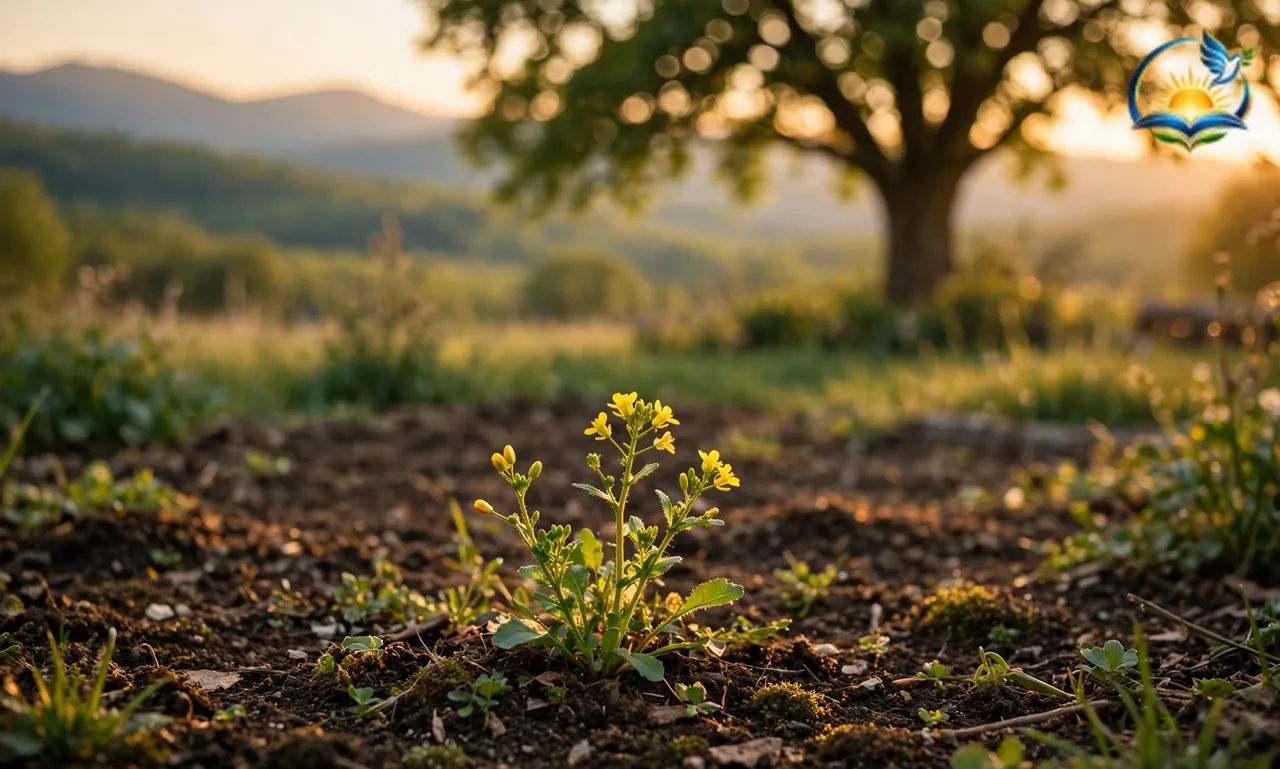
The heart of Matthew 17 20 21 is the mustard seed — one of the smallest seeds a farmer in Jesus’ day would sow, yet it grows into a large plant. Jesus chose the smallest thing His listeners knew and set it beside the largest obstacle they could picture: a mountain.
“If ye have faith as a grain of mustard seed” does not mean that faith must be tiny. It means that faith does not need to be large to be real. A small, genuine trust in God carries the same power as a great one.
“Ye shall say unto this mountain, Remove hence to yonder place; and it shall remove.” The mountain is a picture of the obstacle that will not move by ordinary effort — an illness that will not lift, a debt that will not shrink, a relationship that will not heal, a habit that will not break. Jesus does not say the mountain is small. He says faith speaks to it, and God moves it. The promise is not that every difficulty disappears the moment we pray, but that no difficulty is beyond God’s power when we trust Him.
If you want a companion passage about blessing and favour, read the blessed and highly favored scripture alongside this one.
“And nothing shall be impossible unto you.” These are strong words, and they need careful reading. They do not mean faith forces God to grant any request. They mean that when our trust is placed in God and our prayers line up with His will, no barrier stands beyond His reach. That is why the verse begins with “Because of your unbelief”: the problem was not a weak God, but weak trust.
In Matthew 21:21 (KJV), He said: “Jesus answered and said unto them, Verily I say unto you, If ye have faith, and doubt not, ye shall not only do this which is done to the fig tree, but also if ye shall say unto this mountain, Be thou removed, and be thou cast into the sea; it shall be done.” Luke records the same picture with a tree instead of a mountain: “And the Lord said, If ye had faith as a grain of mustard seed, ye might say unto this sycamine tree, Be thou plucked up by the root, and be thou planted in the sea; and it should obey you.” (Luke 17:6, KJV).
For daily life, this means three things. First, do not measure your faith by your feelings, but by the God you trust. Second, speak to the mountain instead of only talking about it — pray directly about the problem, by name. Third, keep trusting when the answer is slow.
Matthew 17 20 21 Verse 21: Prayer and Fasting
Verse 21 is short, but it carries the second half of the teaching: “Howbeit this kind goeth not out but by prayer and fasting.” Jesus is still answering the disciples’ question — why could they not help the boy? Part of the answer was unbelief. The other part was that some struggles need more than a quick prayer.
“This kind” refers to the kind of spiritual resistance the disciples had just met: a stubborn, deep-rooted problem that did not yield to an ordinary attempt. Jesus is saying that some breakthroughs come only when prayer deepens into fasting.
Fasting, in the Bible, is giving up food for a set time, for prayer. It is not a hunger strike, and it is not a way to earn God’s favour. It is a way of saying, “God, You matter more to me than my next meal.” It clears away distraction. Jesus Himself fasted for forty days, and He taught His followers to fast quietly, without showing off (Matthew 6:16-18).
Mark’s account of the same event adds a matching line. In Mark 9:29 (KJV), Jesus said: “And he said unto them, This kind can come forth by nothing, but by prayer and fasting.”
Fasting is a serious physical act, and it is not safe for everyone. Anyone who is pregnant, has diabetes, an eating disorder, a heart condition, or any illness, or who takes regular medication, should not fast without medical guidance. Children, older people, and anyone whose health is fragile should be careful. Fasting should never punish the body or replace medical care. Gentler forms exist — skipping one meal, or setting aside social media for a day. If you are unsure, ask a doctor first and start small.
Prayer has no such limits. Anyone can pray, anywhere, at any time. The verse joins the two for a reason: fasting without prayer is only hunger, and prayer without any sacrifice can stay shallow. Together, they express a wholehearted turning toward God. The promise of Matthew 17 20 21 is not that fasting forces God’s hand. It is that when we seek God with our whole heart, we are in the place where breakthroughs happen.
The Story Behind Matthew 17 20 21
To understand Matthew 17 20 21, it helps to know what happened just before. The passage sits inside a larger story in Matthew 17:14-21 — Jesus’ answer to a real failure, not a general lecture.
The chapter opens on a mountain, where Jesus was transfigured before Peter, James, and John. Below, a father came to the other disciples with his suffering son. The King James Version describes the boy this way: “Lord, have mercy on my son: for he is lunatick, and sore vexed: for ofttimes he falleth into the fire, and oft into the water.” (Matthew 17:15, KJV). The father had brought the boy to the disciples, and they could not cure him.
When Jesus came down and heard this, He answered: “O faithless and perverse generation, how long shall I be with you? how long shall I suffer you? bring him hither to me.” (Matthew 17:17, KJV). Then Jesus rebuked the evil spirit, and the boy was healed: “And Jesus rebuked the devil; and he departed out of him: and the child was cured from that very hour.” (Matthew 17:18, KJV).
Later, away from the crowd, the disciples asked the question every honest believer has asked: “Why could not we cast him out?” (Matthew 17:19, KJV). That question is the reason Matthew 17 20 21 exists. Jesus did not scold them. He answered with the mustard seed and with prayer and fasting.
Two lessons in the story are easy to miss. First, failure in prayer is not the end of faith. The disciples had failed in front of a crowd, yet Jesus still taught them. Second, the father’s prayer was simple and desperate — “Lord, have mercy on my son” — and it was enough. You do not need polished words. You need only to bring it.
The story explains why the teaching is so practical. Jesus was not giving a theory of faith. He was answering people who had just tried, failed, and wanted to know why. His answer is the same for us: trust God with the faith you have, however small, and when the struggle is deep, deepen your prayer — with fasting, if you are able.
For students and families facing exams and big decisions, the bible verse for exam collection is a helpful companion to this passage.

Blessings and Prayers from Matthew 17 20 21
The verses of Matthew 17 20 21 are not only for reading. They are for praying. The 48 blessings and prayers below are original words written from this passage, in six groups of eight. Use them in the morning, share them with family, or pray them over your own impossible situation.
Short Blessings of Mustard-Seed Faith
- May your smallest faith move your biggest mountain today, in Jesus’ name.
- God bless you with faith like a mustard seed — small, real, and strong enough.
- May the mountain before you move, and may your heart rest in God’s power.
- Lord, take my little faith and do great things with it today.
- May nothing be impossible for you, because nothing is impossible for God.
- God bless your day with courage that starts small and grows tall.
- May your faith be a seed today and a shelter by the end of the week.
- Lord, help me trust You when I cannot see the way forward.
Prayers for Impossible Situations
- Heavenly Father, this mountain is too big for me, but it is not too big for You. Move it, Lord.
- Jesus, I bring You the problem I cannot solve. Give me mustard-seed faith and a patient heart.
- Lord, the doctors have done all they can, the doors are all closed, and I am still trusting You.
- God, I ask for a breakthrough in my family that only You can bring.
- Father, the debt feels like a mountain. Give me wisdom, provision, and peace while I wait.
- Lord Jesus, heal what medicine cannot reach and comfort what words cannot touch.
- God, my marriage feels broken beyond repair. I place it in Your hands and trust You to move.
- Father, open the door that no one else can open, and close the one that would harm me.
Morning Blessings of Faith
- Good morning. May your faith be fresh, your heart be light, and your mountain be moved today.
- As the sun rises, may God rise over every worry you carry into this new day.
- May this morning bring you a mustard seed of hope and a mountain of God’s grace.
- Lord, bless this day before it begins, and bless every step I take in it.
- May your morning be warm, your prayers be heard, and your faith be unshaken today.
- God bless your morning with peace that passes understanding and strength that does not run out.
- Rise and shine — the God who moves mountains walks with you into this day.
- May today be the day you see the first small sign that your mountain is moving.
Prayers for Family and Loved Ones
- Lord, bless my children with faith that grows like a mustard seed into a strong tree.
- God, protect my family today and move every mountain that stands against their peace.
- Father, I pray for my daughter’s future — give her courage, wisdom, and unshakable faith.
- Jesus, bless my son with strength for his battles and hope for his dreams.
- Lord, heal the distance between us and bring our family back together in love.
- God, bless my parents with health, comfort, and the peace of knowing You are near.
- Father, I pray for my spouse — renew our love and move the mountains between us.
- Lord, watch over my loved ones who are far away, and keep them safe in Your hands.
Blessings for Difficult Times
- When the night is long, may your faith be the small light that refuses to go out.
- God bless you in the waiting — may your hope hold steady until the answer comes.
- Lord, I am tired and afraid. Hold me close and remind me that You move mountains.
- May your tears water the seed of faith that God will grow into a testimony.
- In the middle of the storm, may you hear God’s quiet voice saying, “Trust Me.”
- God, give me strength for today and faith enough for tomorrow, one day at a time.
- Lord, when I cannot see the mountain move, help me believe it is already moving.
- May your hardest day become the ground where your strongest faith takes root.
Messages to Share with Friends
- Sending you a mustard seed of faith today — may it grow into a mountain-moving miracle.
- Just a reminder: your faith may feel small, but your God is great. Keep going.
- I am praying for your mountain today. Nothing is impossible for God.
- Share this with someone who needs hope: small faith, big God, moving mountains.
- Thinking of you and praying that God moves what you cannot move.
- May your week be blessed with answers, peace, and one mountain moved.
- A little faith goes a long way when it is placed in the right hands.
- Praying that your impossible situation meets God’s possible today.
The Meaning and Significance of Matthew 17 20 21
The meaning of Matthew 17 20 21 reaches beyond the two verses themselves. Together they describe how faith works: it begins small, it speaks directly to the problem, and it is strengthened by prayer and fasting when the problem is deep.
First, the passage corrects a common misunderstanding. Many people think faith is a feeling of certainty, and that doubt means they have no faith at all. The disciples had just failed, and their faith felt small. Jesus did not tell them to manufacture a bigger feeling. He told them that a grain of mustard seed is enough. Faith here is not a measure of confidence. It is a direction of trust — turning toward God with whatever trust you have. Even the father in the story came with desperate, imperfect faith, and it was enough.
Second, the passage teaches that faith is active, not passive. “Ye shall say unto this mountain” — faith speaks. It names the problem, brings it to God, and refuses to accept that the problem is bigger than God. This is not positive thinking. Positive thinking trusts in the power of the mind. Mustard-seed faith trusts in the power of God. The difference matters: when the mountain does not move at once, positive thinking collapses, while faith can keep waiting on God.
Third, the passage connects faith with humility. The disciples could not help the boy, and their failure was public. Jesus’ answer began with “Because of your unbelief” — a plain diagnosis, not a condemnation. In another place, a father cried out, “Lord, I believe; help thou mine unbelief” (Mark 9:24, KJV). That prayer — belief mixed with doubt — is one of the most honest in Scripture.
The significance of Matthew 17 20 21 for today is simple and practical. It gives hope to people whose faith feels too small, language to people who do not know how to pray, and a next step to people still waiting. If you are praying for a daughter facing exams, interviews, or a new beginning, you may find encouragement in the prayer for my daughter success collection as well.
One more thing about Matthew 17 20 21 matters: the passage does not say faith guarantees any specific outcome, on any timetable, in any form we choose. The boy was healed, but the New Testament also shows faithful people who were not healed or rescued as they asked. Faith does not control God. It trusts Him — including when the answer is “wait,” or when it looks different from what we asked. That trust, held through disappointment, is the deepest form of mustard-seed faith.
How to Use and Share These Blessings
The blessings and prayers from Matthew 17 20 21 are written to be used, not only read. Here are practical ways to use them, and to share the passage with others.
In your morning prayer. Read one blessing from the morning group aloud before the day begins. Say the mountain by name — the bill, the diagnosis, the exam, the conversation you are dreading — and ask God to move it. A short, honest prayer said daily does more than a long one said once.
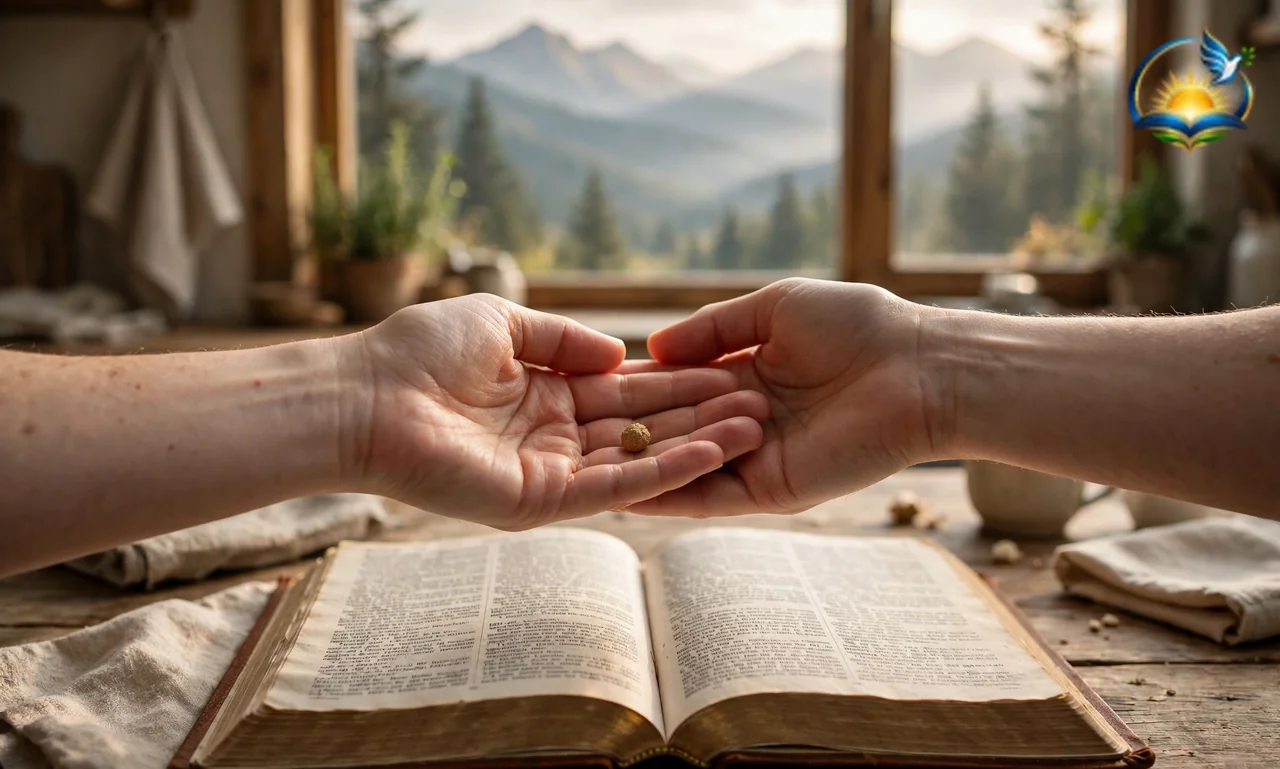
With family. Choose one prayer from the family group each evening and pray it together. Children understand the mustard seed quickly. Planting a real mustard seed in a small pot teaches the passage simply: small beginnings, great growth, God’s power.
By message or card. Send one short blessing to a friend who is struggling. A single line — “your faith may feel small, but your God is great” — can carry someone through a hard afternoon. Share the verse too, so the blessing points back to Scripture.
On social media. The short blessings work well as captions. Pair one with a photo of a sunrise, a mountain, or a small plant, and add the reference Matthew 17:20-21 so readers can find the passage.
With prayer and fasting. If you decide to fast as part of praying over a deep need, start gently and safely. A one-meal fast, or a fast from a particular food, is a reasonable beginning. Drink water, keep the fast short, and break it if you feel unwell
Do not fast if you are pregnant, have diabetes or an eating disorder, take medication that requires food, or have any health condition that could be affected — ask your doctor first, and consider a non-food fast instead, such as setting aside social media for a day to pray. Fasting is a spiritual practice, not a medical treatment. Its purpose is to clear space for prayer, not to punish the body. If fasting is not safe for you, your prayers are no less heard.
In a prayer group or church. Read the two verses aloud, tell the story in your own words, and invite each person to name one mountain. Pray for each mountain by name, and close with the verse from Hebrews: “Now faith is the substance of things hoped for, the evidence of things not seen.” (Hebrews 11:1, KJV). For anyone walking through a season of recovery or restoration, the god is restoring you collection offers further words of hope alongside this passage.
Related Blessings
If Matthew 17 20 21 spoke to you, these related topics may help you go deeper: blessings for impossible situations, morning prayers of faith, prayers for healing and strength, Bible verses about hope, and short blessings to share with family and friends. Browse them under Bible Verses & Christian Faith.
Frequently Asked Questions
What does Matthew 17:20-21 mean?
Matthew 17 20 21 means that even the smallest real faith, placed in God, can overcome what looks impossible. Verse 20 shows, through the mustard seed moving a mountain, that faith’s power comes from God, not from its size. Verse 21 adds that some deep struggles need prayer joined with fasting.
What is the mustard seed in Matthew 17:20?
The mustard seed is one of the smallest seeds known to Jesus’ listeners, yet it grows into a large plant. Jesus chose it to show that small, genuine trust in God is enough.
Why is Matthew 17:21 missing in some Bibles?
Matthew 17:21 is present in the King James Version but omitted in many modern translations, such as the NIV and ESV, where it usually appears as a footnote. This is a well-documented textual difference: the verse is absent from some of the earliest Greek manuscripts and present in others.
Can faith really move mountains?
In Matthew 17:20, the mountain is a picture of an obstacle that cannot be moved by ordinary effort — an illness, a debt, a broken relationship, a stubborn habit. The verse teaches that no such obstacle is beyond God’s power when we trust Him.
What does “this kind goeth not out but by prayer and fasting” mean?
“This kind” refers to the deep, stubborn resistance the disciples had just faced when they could not help the boy. Jesus meant that some breakthroughs need more than a quick prayer — they need prayer deepened by fasting, setting aside food to focus fully on God.
How do I pray with mustard-seed faith?
Pray honestly and directly. Name the problem, bring it to God in your own words, and trust Him with the outcome. A short prayer — “Lord, this mountain is too big for me, but not for You” — is mustard-seed faith in action.
Is fasting safe for everyone?
No. Fasting is not safe for everyone. Anyone who is pregnant, has diabetes, an eating disorder, a heart condition, or any illness, or who takes regular medication, should not fast without medical guidance. Children and older people should also be careful. If you are unsure, ask a doctor first.
What happened in the story behind Matthew 17 20 21?
A father brought his suffering son to the disciples, and they could not heal him. Jesus healed the boy at once, and when the disciples asked why they had failed, He answered with the mustard seed and with prayer and fasting (Matthew 17:14-21).
What is the difference between Matthew 17:20 and Luke 17:6?
Both verses use the mustard seed, but with different pictures. Matthew 17:20 speaks of saying to a mountain, “Remove hence to yonder place.” Luke 17:6 speaks of saying to a sycamine tree, “Be thou plucked up by the root, and be thou planted in the sea.”
How can I share Matthew 17 20 21 with someone who is struggling?
Share the verse itself first, then one short blessing from this article. A message like “your faith may feel small, but your God is great” is easy to send and easy to receive.
Final Thoughts
Matthew 17 20 21 is a short passage with a long reach. It meets you where your faith actually is — small, tired, honest — and tells you small is enough. The mustard seed does not pretend to be a tree. It trusts the soil, the sun, and the rain, and grows. Your faith works the same way when placed in God: it starts small, it grows quietly, and in time it moves things you could not move yourself.
If you are facing a mountain today, do not wait until your faith feels big enough. Bring the little you have. Pray about the problem by name. And if the struggle runs deep, add prayer and fasting — carefully and honestly. The God who moved for a desperate father and his son has not changed, and the promise still stands: nothing shall be impossible unto you.
May your faith be like a mustard seed, and may your mountain move in God’s perfect time. For more verses and images to share, you can explore matthew 17 20 21 on Pinterest.

Daily Blessing Faith — Inspiring hearts with daily blessings, prayers, faith, and words of hope. Start each day with faith, peace, and God’s love.